There are stories in the human universe that begin in one way and then take on other forms, of even greater importance and value. This is what happened to Barolo, which, from being the “wine of kings,” more dreamt of than consumed, has become, over the course of many decades, the “wine of the world,” beloved and desired all over the planet.
Compared to the many giants that populate the oenological universe, Barolo is a small reality. First of all, Barolo is the name of a tiny town, with a few rows of houses crowning the sides of those elongated hills that, starting from higher altitudes, slope down to the foot of the majestic castle. Barolo is also the name of the wine that this town has long shared with the surrounding countryside, ten other municipalities, other realities, and other people.
We are just a few kilometers from Alba, heading south-west. Barolo was not born here by chance. It is the result of a fortunate combination of a soil mainly composed of limestone, silt, and clay, and sometimes even sand, along with the Nebbiolo grape, aristocratic and precious. Above, there is a sky that every year provides a unique and different climate, with rain and snow, sun and fog, wind and frost, freshness and morning dew. Finally, in this production mechanism, man intervenes in this production mechanism, he is the one who knows how to harness the value of natural characteristics and direct them into a unique wine production.
If we want, Barolo is also a style that tells the story of a prestigious wine in its origin and captivating in its organoleptic characteristics, one that speaks of greatness, aristocracy, power, and amplitude, of the ability to withstand time and a refined propensity for the table.
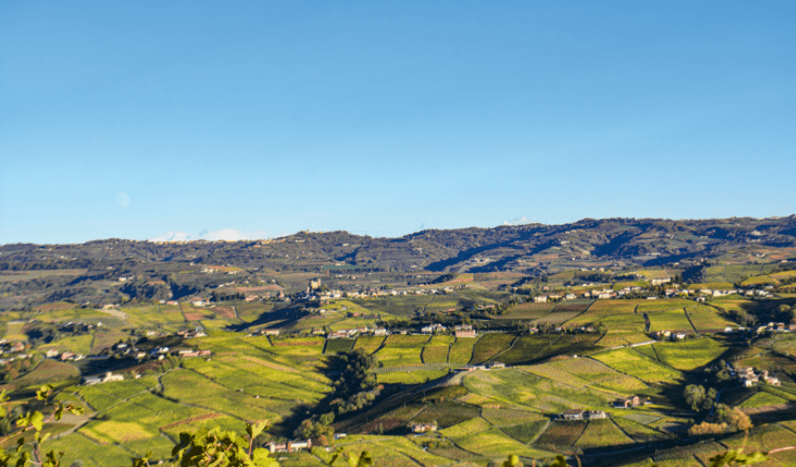
A bit of past, to understand the present
There is a very well-known story of Barolo, but there are aspects of its journey that have had little notoriety. The story is like this. It is made up of actions and reconsiderations, of leaps forward and moments of reflection. Because the story of a wine – like that of a food – is made of intuitions, of projects, sometimes rational, sometimes extemporary; it is made of time passing and effort, sometimes enlightened, other times just astute, of women and men who, in past eras, worked and imagined the future, fought and meditated, persevered or started over from scratch.
There are emblematic cases like that of Juliette Victurine Colbert de Maulevrier, lovingly called “Giulia di Barolo,” who married Carlo Tancredi Falletti in Paris in 1807. He was an essential figure in the Falletti family, who even become mayor of Turin from 1825 to 1829. Giulia Colbert’s arrival in Barolo at the beginning of the 19th century helped promote the production of the local Nebbiolo as a dry wine, “in the style of Bordeaux wines.”
It was long rumoured that Colbert had involved Count Luis Oudart in this project and that it was he who favoured the production of a Barolo with the complete transformation of sugar into alcohol.
The passive repetition over time of these reports ended up reinforcing the conviction that Louis Oudart was indeed an eminent scholar on grape and wine issues, to the point of convincing that his work on the evolution of Barolo had been decisive.
More recent studies, such as the research by Anna Riccardi Candiani published in the book Luis Oudard e i vini nobili del Piemonte (Slow Food Editore, 2011), has brought the contribution of this “technician” back into the proper context, highlighting especially his commercial skills, perhaps with useful technical foundations, but without confirming the technological role that had been attributed to him for decades.
Rather, in this fundamental work of the evolution of Barolo, a decisive role must be attributed to Francesco Staglieno, a general under King Carlo Alberto and a personal friend of Camillo Benso di Cavour. His experiments in the vinification of Nebbiolo grapes at the Castello di Verduno were crucial, when the castle and its estates had been acquired by the king after he discovered the greatness of this wine.
It should be said that the Falletti family had played a fundamental role in the evolution of Barolo even before Giulia Colbert de Maulevrier arrived. A testament to the Falletti’s special attention to the town of Barolo is the so-called “Consegnamento feudale,” a document written by the Estate Delegate Borgogno between 1662 and 1670.
The document reaffirms the Falletti family’s ownership of the Barolo Castle and the Volta Castle, and emphasises their possession of certain feudal properties such as the “toll, the oven, and the inn”, as well as mentioning the presence of a cellar in the town of Barolo, equipped with presses and containers for wine.
There have been episodes in the history of Barolo where history and legend have intertwined. This is the case, known to many, that took place in 1835 when “Giulia di Barolo” decided to tell King Carlo Alberto about this wine. The king became curious and interested in tasting this product of the vineyard. In fact, he seemed a little irritated when he said, “Marchesa, you have spoken to me several times about this sublime nectar, but so far I have not had the honor of tasting it…”. So, the Marchesa decided to surprise the king: she organized a caravan of wagons and barrels and sent them to Turin. On each wagon, there was a long wine transport container (a “carrà”) of 7 hectolitres filled with Barolo from one of the Falletti family’s farms. Legend has it that there were 325 wagons in total. An enormous number! One per day for the entire year, excluding the forty days of Lent.
The caravan proceeded as fast as it could on the roads of the time and, on entering the city, paralysed the subalpine capital: when the first wagon arrived in front of the Royal Palace, the last was still at the entrance to Turin.
Such a striking and generous gesture by the Marchesa Falletti made a deep impression on Carlo Alberto: after tasting the wine over and over again, the King became so passionate about it that he rushed to produce it himself. Through his local contacts, he purchased the Castello di Verduno and its estates, and – with the help of General Staglieno – he began producing that precious wine.
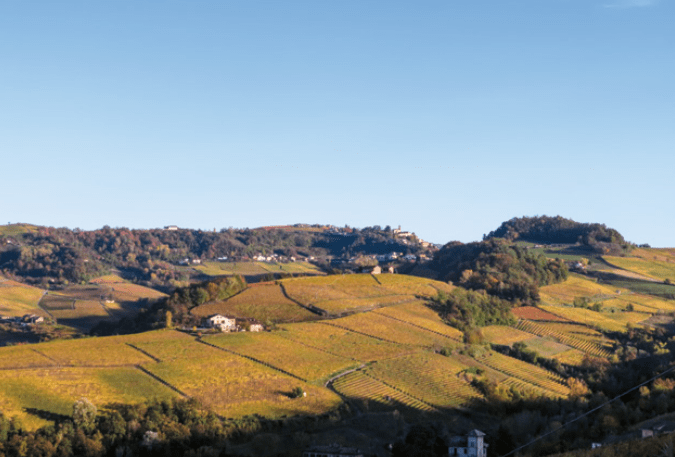
Other characters, between history and current events
Many other figures have played a role in the story of Barolo, some with outstanding institutional stature, others simply as interpreters of the wine’s production evolution. Starting with Camillo Benso, Count of Cavour, initially appreciated for his work on the family estate in Grinzane Cavour, and later for his enlightened contributions as Minister of Agriculture and Prime Minister of the Kingdom of Sardinia. Speaking of the House of Savoy, how can we forget King Vittorio Emanuele II’s commitment to establishing the Fontana Fredda estate in Serralunga d’Alba, where the Emanuele di Mirafiore Winery was later founded, and eventually the Tenimenti di Barolo and Fontanafredda, which were owned for a long time by Monte dei Paschi di Siena.
Thanks to these noble “supports”, Barolo continued its journey, steadily growing in quality and image. At the height of the 19th century, Barolo quickly became an “ambassador” of this small kingdom to the courts of half of Europe, until revealing its essential characteristics. By the end of the century, Lorenzo Fantini, in his Monografia sulla Viticoltura ed Enologia della Provincia di Cuneo, would happily summarize these traits as being “suitable for aging and ready for export”.
Barolo and its producers, along with those of Barbaresco and other great Italian wines, were the protagonists of that movement advocating for a law on quality and origin wines, to distinguish them from generic ones. In fact, in the absence of clear regulations, adulterations and frauds in trade were already proliferating, posing significant competition that harmed quality producers.
Thanks to their efforts, in 1908 the “Pro Barolo” Association was founded in Barolo to protect the wine from the speculative phenomena of the time. After this initiative, which was also replicated in Barbaresco, the first concrete result came in the mid-1920s with the law on “Quality Typical Wines” (Decree-Law of 1924, converted into law in 1926). Thanks to this measure, in 1933, Barolo was recognized as a “Quality Typical Wine” along with Barbaresco, and the following year, the most prudent producers of the two wines founded the Consortium for the Protection of Quality Typical Wines Barolo and Barbaresco, which still operates today, though with various statutory changes, as the Barolo Barbaresco Alba Langhe and Dogliani Consortium.
The most critical period for Barolo and the rest of the Alba region coincided with the 1940s and 1950s, due to the severe disruptions caused by World War II and the challenging post-war reconstruction. The establishment of some cooperative wineries in the 1950s marked the beginning of the redemption of the Barolo wine world and other Alba wines. In Castiglione Falletto, Arnaldo Rivera, an enlightened schoolteacher and active partisan during the Liberation War, was a concrete example of this early Renaissance, founding La Terre del Barolo.
The most important step came in 1963 with the enactment of Law 930 on wines of designated origin, which would grant Barolo DOC status on 23 April 1966 and DOCG status on 1 July 1980. The world of Barolo in the second part of the 20th century is studded with enlightened and tenacious figures who have kept the quality level of this wine high, even in the presence of production rules that were still fragmentary.
Alongside the aforementioned Maestro Rivera, we remember men like Renato Ratti and Massimo Martinelli, Giulio and Bartolo Mascarello, Paolo Cordero di Montezemolo, Giuseppe Mascarello, Alfredo Currado Vietti, Olivio and Gildo Cavallotto, Giovanbattista Rinaldi, Francesco Rinaldi, Felice Bonardi, Aurelio Settimo, Comm. Burlotto, Giacomo and Luigi Oddero, Giovanni and Aldo Conterno, Beppe Colla, who at Prunotto was among the first to include a reference to the cru on the label as a more reliable indication of origin. And then the Marchese Fracassi at Cherasco, Comm. Bressano and Livio Testa at Fontanafredda, Eng. Giuseppe Boffa at Pio Cesare and, among the women, Tota Virginia at Serralunga d’Alba.
The recognition of the two designations of origin definitively consecrated Barolo as a wine of quality and image. Both were important: the DOC (Denomination of Controlled Origin) because it showed the way for producers, who followed it with wisdom and determination; and the DOCG (Denomination of Controlled and Guaranteed Origin) because it combined paper control with physical inspection, strictly defining Barolo’s production to benefit its identity and economic value.
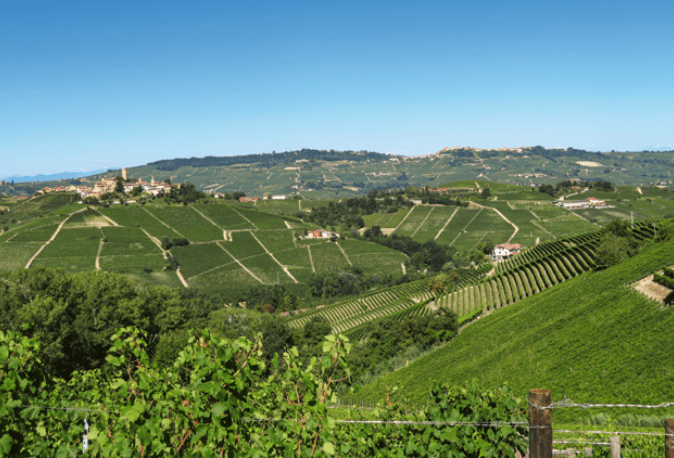
One area, 11 towns and 181 MeGa
The origin area of Nebbiolo grapes for Barolo is a land of hills and valleys, with steep ridges, located in the province of Cuneo in southern Piedmont. In total, there are eleven towns, three of which (Barolo, Castiglione Falletto, and Serralunga d’Alba) are entirely included, while the other eight (Diano d’Alba, Grinzane Cavour, Monforte d’Alba, Novello, Cherasco, La Morra, Verduno, and Roddi) are only partially included.
From a morphological point of view, the Barolo area is a landscape of hills, elongated and steep, arranged in various ways to create a “grid” of rare beauty.
Here, the climate has a continental style, with cool and temperate conditions prevailing, although in recent times the heat has become a bit stronger. While snow used to dominate the winter, it has become somewhat scarce. It is not known whether this is a temporary or lasting phenomenon, but rain compensates for this “absence,” especially in spring and autumn. Summer, on the other hand, brings heat and sometimes humidity, with hopes that a thunderstorm – without hail – may alleviate the situation. Recent years have not always confirmed the usual 800-900 millimeters of annual rainfall, but the vine is capable of drawing water from considerable depths on its own.
Every now and then throughout the year there are strong and troublesome winds, but as a rule the protection to the south-west of the Maritime Alps and the Ligurian Apennines reduces everything to light breezes. The ‘fog’ phenomenon is not to be overlooked in the lower parts of the area, near watercourses and in the colder months.
It is stated that the exclusive grape variety in the vineyards is Nebbiolo. The most recent modification to the Barolo regulations dates back to September 30, 2010. The minimum aging period is defined as 38 months starting from November 1st after the grape harvest. At least 18 of these months must be spent in wooden containers. To use the term “Riserva” on the label, the wine must stay in the cellar for at least 62 months, again starting from November 1st of the year the grapes were harvested. In this case as well, the wine must be aged in wood for at least 18 months.
The maximum yield of grapes in wine is 70% at first racking and 68% at the end of ripening. Therefore, the maximum production per hectare is 8,000 kg of grapes, 5,440 litres and 7,253 bottles of 0.75 litres of wine. The minimum alcohol content is 13.0 % Vol. and the minimum total acidity 4.5‰.
Barolo Chinato is regulated by Article 7 of the Disciplinare and refers to the aromatised wine prepared with Barolo and with specific flavouring linked to cinchona calissaya.
The origin of the grapes can be better specified with the use of Additional Geographical Mentions and the ‘Vineyard’ with its toponym. On the label, the Mention may be given alone, while the ‘Vineyard’ must be indicated in conjunction with the Mention.
The Additional Geographical Mentions (MeGA) are geographical areas smaller than the origin zone, which have been officially delimited and listed in the specifications. Eleven of these correspond to the individual municipalities in the area of origin. The other 170 are smaller and vary in size (from a few hectares to as much as 200-300 hectares). Their names refer to historical or traditional terms, often of great identity value.
The MeGA project is an extraordinary opportunity for Barolo, above all because it could generate real specific declinations of this wine in the future, with an increasingly valuable identity and economic value.
The attention devoted to MeGA has gradually consolidated to the point that in recent vintages the share of Barolo claimed with this reference has often exceeded (60%) the share of that without such a claim (40%). And, then, there are more and more MeGAs used on the labels of the various Barolo wines: today there are more than 150 and they represent more than 80% of the total.
Some economics and statistics
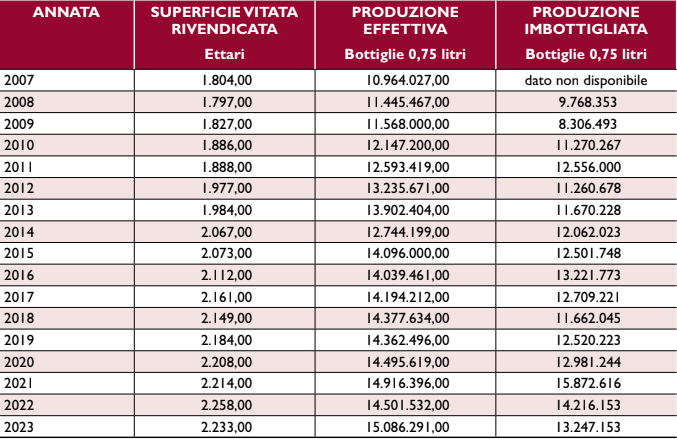
The table published here summarizes economic values related to the planted vineyard area and actual production between 2007 and 2023, as well as bottled production between 2008 and 2023. Between 2007 and 2023 (17 harvests), the vineyard area grew by 429 hectares, representing 23.78% of the initial data, with an average increase of 25.23 hectares per year. At the same time, actual production increased by 4,122,264 bottles, representing 37.59% of the initial data, with an average increase of 242,486 bottles per year. Proportionally, production grew more than the vineyard area, highlighting the optimization of the entire viticultural potential.
As far as bottling in the calendar year is concerned, between 2008 and 2023 (16 vintages) the increase was 3,478,800 bottles, i.e. 35.61% of the initial figure. In this regard, it should be remembered that the bottled volume results from the sum of several vintages bottled during the calendar year.
Comparing bottled and actual production between 2008 and 2023, the average annual figure for bottled Barolo was 12,239,139 bottles compared to the average actual production of 13,606,625 bottles. The average bottled figure accounts for 89.95% of actual production, a high figure that confirms the excellent health of the designation. The 10.05% that remains is not a negative figure, because – rather than a stock – it represents a reserve for the years to come.
Giancarlo Montaldo
May 2024