
In previous issues we have discussed ‘mixed drinking’ through the best-known cocktails. Many had among its ingredients flavoured wine, Vermouth. But it is the consumption in purity that is marking its true renaissance.
The use of flavouring the product of the vine by macerating bitter herbs comes from classical Mediterranean culture. It was done by the Greeks, continued by the Romans and then by medieval apothecary monks. However, the contemporary history of Vermouth was written in the last two centuries, first in Torino, then in European and North American capitals.
Already in the first half of the 19th century, bars all over Europe and North America were distributing bottles of Carpano, Bosca, Cora, Gancia, Cinzano and Martini, as well as the French Dolin, also in Savoy territory. In the second half of the 19th century different styles were created by the French Lillet and Noilly Prat, as well as the Spanish Sáenz and Yzaguirre.
The recipes codified by the great bartenders between the 19th and 20th centuries such as Jerry Thomas, O. H. Byron, Frank Newman and Harry Craddock, often contained mentions of this Italian speciality.
From Vermouth to Vermouth of Torino
Wormwood-flavoured wine has been renewed until recent history: we are in 2017, with the publication of the specification regulating and protecting the geographical indication ‘Vermouth of Torino’.
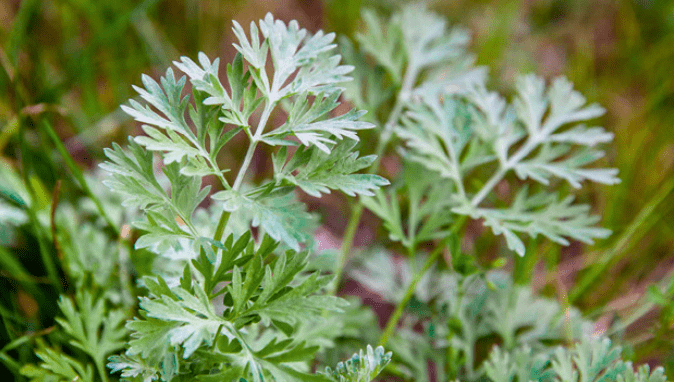
The ‘tanning’ of a wine with herbs, woods, spices and sugar gives an interesting alternation between sweet and bitter; sipped without any additions, it is in itself an aperitif that stimulates gastric functions. The thread that binds almost all aromatised wines produced in Europe is the use of a plant, Artemisia Absinthium or Wormwood.
The strong bitter notes are yielded during the alcoholic maceration of the leaves and flowering apical tops of two of the Absinthe varieties. The alcohol favours the extraction of those essential oils and terpenoids that characterise the flavoured wine with their bitter taste, giving it eupeptic properties.
Tasting a Vermouth is like trying to observe a polyhedron in all its facets, each of which may appear more iridescent or more muted, depending on the point of observation. The higher temperature, or on contrary the dilution of ice, may simply attenuate, or enhance, other officinal notes derived from marjoram and thyme, Roman chamomile and lung lichen (Cetraria islandica).
In some formulas one can detect the solo of certain spices: cloves, nutmeg or star anise. In others, the citrus note from bitter orange peel may be evident. Other botanicals that may contribute to a marked identity may be laurel, cardamom, coriander, cinchona bark, quassio wood, melissa, clary sage, vanilla and saffron.
The renaissance of Vermouth also passes through direct tasting in purity, useful to grapple with recognising some of the officinal herbs and spices used. Except then to rediscover the true intent of the master liqueurists: to blend wine, sugar and alcohol as evenly as possible with herbs and spices.
From the great classics to innovative proposals
At the bar counter, people continue to use Vermouth in the preparation of the great classics: Americano, Negroni, Martinez, Martini and Manhattan, to name just a few, increasingly choosing to use an artisanal one instead of the products of the multinationals. Noteworthy, bartenders are using flavoured wine more and more creatively as a basis for the creation of newly developed cocktails. In this way, bartenders become ambassadors of the Vermouth production area and witness from behind their counter the rediscovery of all other locally produced liqueurs and spirits.
We try to intrigue the reader to taste the different recipes in purity; perhaps the palate will be more focused on the aftertaste of a particular officinal or spice, or appreciate the warm harmony of the whole. The invitation to taste also includes aromatised wines other than those from Piemonte, those ‘outside the consortium’, prepared in other Italian regions, as well as those of their French cousins and Spanish proposals.
Vermouth and the cocktails created using it bring freshness and bitter notes that ‘cleanse’ the palate, lending themselves very well to pairing with rich, savoury foods. Why limit yourself to appetisers and aperitif bites and not dare with a few more gastronomic pairings? Interesting gourmand experiences can be had with very aged cheeses, a scale of different ages of Parmigiano Reggiano Dop, for example. Different but equally intriguing facets can be discovered by combining Vermouth with extra dark chocolate.
This aromatised wine, in its versatility, can even be the stimulus for a cultural journey. The starting point for this travel proposal could be Torino, about which the writer Edmondo De Amicis wrote ‘Torino has the hour of vermut, the hour when its face turns colour and its blood circulates faster and warmer. Then schools pour clouds of children into the streets, throngs of workers come out of the factories, tramcars pass crammed with people and the liquor shops are crowded’. Other stops to discover the capitals of Vermouth could be: Canelli, Milan, Chambéry, Merseillan, Podensac, Tarragona and Reus. Will the constant game of combining in the shaker ‘by similarity’ or ‘by contrast’ reserve us any new trends?
Vocabulary of mixed drinking
Wormwood
There are two varieties of Wormwood allowed in the production of Vermouth of Torino Ig. Of Artemisia Absinthium and Artemisia Pontica, the leaves and the flowering tops are used. Wormhood and thujone are two of the components that give bitter component and aromas to Vermouth.
Specification
The specifications for Vermouth of Torino Ig also include the Superiore type. At least half of the wine must be of Piemonte origin, as well as the origin of the herbs, whether cultivated or harvested. The extra dry variant has a sugar content of less than 30 g/l.
May 2024,
Marco Negro

